
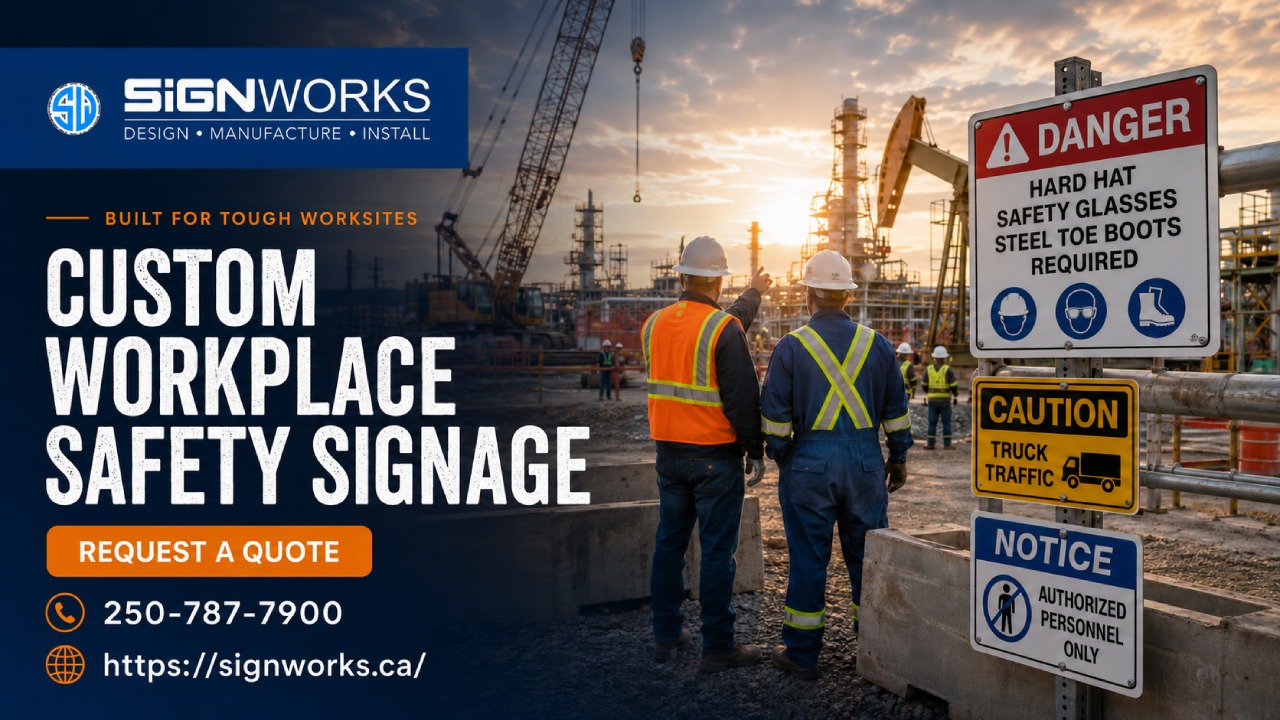
Custom Workplace Safety Signage for Industrial, Construction & Oilfield Sites
Workplace safety signage helps employees, contractors, and visitors recognize hazards before entering a dangerous area or making an unsafe decision. On an industrial property, active construction project or remote oilfield site, these messages must be easy to understand within seconds.
Safety signs must also remain readable in demanding environments. In Fort St. John and across the Peace Region, outdoor signs may be exposed to snow, freezing temperatures, moisture, mud, road spray, wind and seasonal sunlight. The material and design must suit these conditions.
Generic signs can communicate common instructions, but every operation has different traffic routes, restricted zones, equipment hazards and emergency procedures. Custom workplace safety signage allows an organization to display instructions that match its actual site safety plan.
A custom sign can identify required personal protective equipment, warn workers about energized equipment, mark a muster point or direct visitors to the correct check-in location.
SignWorks produces oilfield, gas station and construction signs for organizations in Fort St. John and surrounding Peace Region communities. With the right message, material and placement, safety signage becomes a practical part of daily hazard communication.
Why Workplace Safety Signage Matters on High-Risk Sites
Industrial, construction and oilfield sites can change throughout a single shift. Trucks arrive, equipment moves between work areas, contractors enter controlled zones, and temporary hazards appear as a project progresses.
Employee orientation and verbal instructions are essential, but people also need clear visual reminders where safety decisions are made. Safety signage at workplace entrances and hazard areas reinforces those instructions at the most relevant moment.
Workplace safety signs can warn people before they enter a hazardous area, identify required PPE, show emergency equipment locations and separate pedestrian routes from equipment traffic. They can also communicate important rules to contractors, delivery drivers and first-time visitors.
Signs do not replace hazard assessments, employee training, safe work procedures or supervision. They support these controls by making critical information easier to recognize and remember.
A complete site safety plan should identify the message required at each location, the people who need to understand it and the distance from which it must be visible.
Understanding Safety Signs and Symbols in the Workplace
Effective safety signs combine recognizable visual cues with concise wording. Safety sign symbols help communicate an idea quickly, while written instructions provide details that may be necessary for a particular area.
For example, an image of protective eyewear can attract attention. Adding “Eye Protection Required Beyond This Point” tells the reader exactly what action is expected and where the requirement begins.
Symbols in the workplace commonly represent mandatory actions, hazard warnings, restricted activities and emergency resources. They can tell workers to wear a hard hat, warn them about moving equipment or direct them toward a fire extinguisher.
Workplace symbols should be easy to recognize, clearly visible and consistent throughout the property. Using several different designs for the same instruction can create uncertainty and make the site look poorly organized.
A coordinated system gives workers a predictable visual language from the main entrance and orientation area to the shop floor, equipment yard and remote work zone.
Combine Symbols With Clear Wording
A symbol should support the message rather than force the reader to guess. If a sign contains an unfamiliar symbol, clear text can explain the required action or hazard.
The wording should be short enough to read quickly. Detailed procedures are usually better placed on an information board or in an accessible safety document.
Maintain Consistency Across the Site
Colours, typography, symbols and terminology should remain consistent throughout a sign package. Employees are more likely to recognize a familiar format, especially when moving between several facilities or job locations.
Consistency also makes future replacements easier. A documented sign standard allows an organization to reproduce damaged or missing signs without creating a different design each time.
WHMIS Signs and Chemical Hazard Communication
WHMIS is Canada’s national system for communicating information about hazardous products used, handled or stored in workplaces. Important elements include labels, safety data sheets, and worker education and training.
WHMIS signs can support a facility’s broader chemical safety program. They may identify chemical storage rooms, direct workers to safety information, or communicate that access is limited to authorized personnel.
However, a custom wall sign is not automatically a replacement for a required supplier or workplace label. Employers must identify the federal and provincial requirements that apply to their products and activities.
A safety professional can then confirm the correct wording, pictograms, dimensions, languages and placement for each application.
Chemical Storage Signs
Chemical storage signs can identify designated rooms, cabinets, cages and controlled storage areas. The message may include access restrictions, PPE requirements, emergency contact information or spill response directions.
The approved wording should reflect the products stored in the area and the organization’s safety procedures. A general warning may not be sufficient when workers need to understand a specific requirement before entering.
Supporting WHMIS Hazard Communication
Custom facility signs can reinforce information found on product labels and safety data sheets. For example, an entrance sign may remind workers that protective eyewear and gloves are required before entering a chemical storage room.
This layered approach improves hazard communication because employees receive a general warning before reaching the product or storage area.
Custom PPE Signs That Make Requirements Clear
PPE safety signs are most useful when they state which protective equipment is required and where the rule begins.
A general “Wear PPE” notice may not tell a visitor whether they need safety glasses, gloves, hearing protection or a hard hat. Custom PPE signs can reflect the actual entry procedure for each work zone.
Eye Protection Required
An “eye protection required” sign may be installed near fabrication areas, grinding stations, chemical handling locations and other areas where the organization requires protective eyewear.
The sign should appear before the entry point. This gives employees and visitors time to put on the correct protection before encountering the hazard.
Hard Hat Area
A “hard hat area” sign should be visible from every normal approach to a controlled work zone.
On a construction project, the boundaries of a hard hat area may change as the work progresses. Temporary but durable mounting options allow the sign to move with the controlled area.
Hearing Protection Required
A “hearing protection required” sign can identify designated high-noise areas. Site management should determine the appropriate wording and boundaries based on its noise assessment and approved procedures.
A custom sign can also include another requirement, such as restricted access, when both instructions apply at the same entry point. The design should remain uncluttered and easy to read.
Hazard Warning Signs for Industrial and Oilfield Operations
Industrial and oilfield sites may contain energized equipment, pressure hazards, moving vehicles, confined spaces, and overhead loads. Generic signs may not adequately describe these conditions.
Custom hazard signs allow an organization to communicate the actual hazard present at a particular location. This makes the warning more relevant and helps employees understand why caution is required.
A public-facing entrance may require more explanation than an internal sign used by trained employees. The language, dimensions and viewing distance should reflect the intended audience.
High Voltage Warning Signs
A high voltage warning can be placed near electrical rooms, substations and energized equipment. The message may also state that entry is restricted to qualified or authorized personnel.
These signs should be highly visible before a person reaches the electrical hazard. They should not be hidden behind equipment, open doors or stored materials.
Construction Hazard Signs
Construction hazard signs can identify excavations, overhead work, temporary access restrictions and heavy equipment routes. Because conditions change during construction, these signs should be reviewed as work areas and traffic patterns change.
Temporary signs still need to be durable and securely installed. A warning that falls over, becomes covered in mud or turns away from the intended approach is unlikely to communicate effectively.
Restricted Area Signs
Restricted area signs explain where authorization, training or specific PPE is required. They may be used at electrical rooms, active construction zones, chemical storage areas, equipment yards and secure industrial facilities.
Clear wording could include “Authorized Personnel Only,” “Visitors Must Report to the Site Office” or “Permit Required Before Entry.” The organization’s safety team should approve the final message.
Construction Site Safety Signage for Changing Conditions
Construction site safety signage must function in an environment that evolves throughout the project.
A pedestrian route used during the early stages may become a delivery path later. An excavation warning may only be needed during one phase, while PPE and restricted access requirements remain in place for the entire project.
Planning signs by expected service life can make the system easier to manage. Permanent aluminum safety signs may be used at established entrances and facilities. Portable panels can communicate temporary hazards and routes. Laminated signs may be suitable for protected, short-term indoor notices.
Review the Site From Different Perspectives
Before ordering new construction site safety signage, walk through the property from the perspective of a new employee, subcontractor, visitor, and delivery driver.
Consider where each person enters, which routes they follow, and where they must make safety decisions. This process can reveal unclear directions, missing warnings and areas where several signs are competing for attention.
Update Signs as Conditions Change
A sign that was accurate last month may no longer reflect the current traffic pattern or work zone. Construction managers should include signage in regular site inspections.
Outdated instructions should be removed promptly. Leaving old signs in place can create confusion, particularly when they conflict with newer directions.
Emergency Safety Signs People Can Find Quickly
During an emergency, workers should not have to search through a crowded wall of notices.
Emergency safety signs require strong contrast, simple language, and unobstructed placement. They should remain visible from normal travel routes and should not be hidden by parked equipment, stored materials, open doors or snowbanks.
Muster Point Signs
Muster point signs identify the designated gathering location used during an evacuation. The location and wording should reflect the organization’s emergency response plan.
Large industrial properties may require additional directional signs along the route. These signs should be visible to workers approaching from different areas of the site.
Northern BC weather must also be considered. A muster point sign installed too low could become hidden by accumulated snow.
Fire Extinguisher Signs
Fire extinguisher signs make equipment easier to find, especially when the extinguisher is recessed, positioned around a corner, or difficult to see from the main aisle.
The sign should support the facility’s fire safety plan and applicable requirements. It should also remain visible when nearby doors are open, or equipment is parked in the area.
First Aid and Emergency Equipment Signs
Emergency safety signs can also direct people to first aid stations, eyewash equipment, emergency showers, spill response supplies and exits.
A consistent format makes these resources easier to recognize across a large facility. The same visual system can be used in offices, workshops, warehouses and outdoor work areas.
Choosing Materials for Northern BC Weather
A sign that performs well inside an office may fail quickly when installed outdoors.
Workplace safety signs in Fort St. John and the Peace Region may be exposed to cold temperatures, snow, moisture, mud, wind, road spray and strong seasonal sunlight.
Material selection should reflect the installation environment, required service life and cleaning conditions.
Aluminum Panels
Aluminum panels are a dependable choice for many exterior and industrial applications. Aluminum is rigid, lightweight, and resistant to rust.
Aluminum safety signs can be prepared for installation on walls, fences, gates and posts. The ideal thickness and mounting method depend on the dimensions of the panel, wind exposure and site conditions.
Outdoor signs need secure mounting. Even a well-produced panel can fail if the hardware is inappropriate for its size or location.
Reflective Vinyl
Reflective vinyl can make a sign more noticeable when a light source reaches its surface in low-light conditions.
It may be appropriate for gate warnings, site traffic instructions, equipment routes and muster point signs. It can also improve the visibility of information intended for drivers or night-shift crews.
Reflective vinyl does not replace adequate site lighting. The approach direction, viewing angle and available light should still be evaluated before production.
Laminated Signs
Laminated signs can provide added protection for appropriate applications. Lamination may make printed graphics easier to clean while helping resist moisture, abrasion and fading.
The correct finish depends on whether the sign will be indoors, outside, exposed to chemicals or frequently handled. SignWorks can recommend production options after reviewing the installation conditions.
Design Choices That Improve Legibility
Safety sign printing is only effective when the finished message can be read in the real environment.
A small panel containing several lines of text may look clear when viewed at a desk. The same design may be impossible for a driver to read when approaching an industrial entrance.
Consider Viewing Distance and Speed
The size of the panel and lettering should reflect how far away the reader will be and how quickly they are moving.
A pedestrian can stop and read a detailed instruction. A driver may only have a few seconds to recognize the sign and respond. Traffic signs should contain short messages and strong visual contrast.
Avoid Visual Clutter
Equipment, fencing, advertising signs and stored materials can compete for attention. Important workplace safety signs should be positioned where they are not lost among unrelated information.
If several detailed rules must be displayed, use a clear primary sign followed by a separate information board. This is easier to understand than placing every instruction on one crowded panel.
Use Plain Language
Put the most important instruction first and avoid unnecessary technical wording.
The sign should tell the reader what the hazard is, what action is required or where they need to go. Any wording that does not support one of those purposes should be reviewed for removal.
How to Plan a Custom Safety Sign Package
Ordering individual signs only when a problem appears can create inconsistent wording, colours and formats. A planned sign package is easier to approve, install and maintain.
Complete a Site Sign Audit
Begin by documenting the existing signs and their locations. Take photographs of faded, damaged, obstructed or outdated panels.
Review entrances, parking areas, workshops, chemical storage locations, electrical rooms, equipment routes and emergency gathering points.
Connect Every Sign to the Site Safety Plan
Every sign should communicate an approved rule, hazard or emergency procedure. Confirm the wording with the person responsible for workplace health and safety.
This step reduces the chance of producing signs that contain outdated or conflicting instructions.
Organize Signs by Purpose
Separate the sign schedule into hazard warnings, PPE requirements, restricted access notices, emergency information and directional signs.
Organizing signs by purpose helps create a consistent design system and prevents duplicate messages.
Confirm Installation Conditions
Tell the sign provider where each panel will be installed, how far away it must be read, and whether it will experience weather, chemicals or abrasion.
These details help determine whether the project needs aluminum panels, reflective vinyl, lamination or another finishing option.
Review Proofs Before Production
Check the approved terminology, spelling, symbols, dimensions, colours, quantities and directional arrows.
Safety personnel should verify the final content before production. Keeping the approved sign schedule on file will also make future replacements easier.
Why Work With a Local Fort St. John Sign Team?
Local experience matters when safety signs must perform through Northern BC weather and demanding industrial conditions.
SignWorks understands the practical needs of businesses, contractors and resource-sector operations in Fort St. John and surrounding Peace Region communities. The team can turn client-approved safety messages into clear, durable signage suited to the intended environment.
Safety panels can also be coordinated with broader commercial signage, site identification and directional requirements. This creates a consistent appearance from the main entrance to controlled work areas.
Learn more about the SignWorks team or review the company’s Google Business Profile and customer reviews.
Request Custom Workplace Safety Signs in Fort St. John
Whether your organization needs one high voltage warning panel or a coordinated package of workplace safety signs, begin with the hazard, audience, and installation conditions.
SignWorks can assist with sign layouts, material selection, safety sign printing, and production after your team approves the required message.
Explore the available sign services in Fort St. John or contact SignWorks for a custom safety signage quote.
Providing a sign list, site photos, preferred dimensions, required quantities and completion date will help the team understand the project and prepare an accurate quote.
Frequently Asked Questions
What Is Workplace Safety Signage?
Workplace safety signage is a system of visual messages used to identify hazards, required actions, restricted areas, emergency resources and directions.
It can include hazard warning signs, PPE notices, muster point signs and traffic instructions. Signs should support employee training and safe work procedures rather than replace them.
Can SignWorks Create Custom PPE Signs?
Yes. SignWorks can produce custom PPE signs using client-approved wording and symbols.
Common examples include eye protection required, hard hat area and hearing protection required signs. The team can discuss dimensions, materials and protective finishes for indoor or outdoor use.
Are Aluminum Safety Signs Suitable for Outdoor Sites?
Aluminum is suitable for many outdoor applications because it is rigid, lightweight and resistant to rust.
The appropriate thickness, finish and mounting method depend on the sign’s dimensions, location, wind exposure and expected service life.
When Should Reflective Vinyl Be Used?
Reflective vinyl may be useful when a sign must be noticeable to vehicle operators or night-shift crews.
Typical applications include gate warnings, traffic directions, and emergency gathering locations. Site lighting, placement, and viewing angle still need to be considered.
Do Custom Signs Replace Required WHMIS Labels?
Not automatically. WHMIS hazard communication includes labels, safety data sheets, and worker education and training.
A custom facility sign may reinforce chemical storage rules or restricted access, but it should not be treated as a substitute for a required supplier or workplace label. Organizations should confirm their requirements with a qualified safety professional.
How Often Should Workplace Safety Signs Be Reviewed?
Signs should be reviewed whenever hazards, equipment, traffic routes, access controls, or emergency procedures change.
Routine inspections should also identify fading, damage, obstruction, and outdated wording. Construction sites may require more frequent reviews because site conditions change quickly.
What Information Does SignWorks Need for a Quote?
Provide the approved wording, required quantities, preferred dimensions, installation locations, expected viewing distances, and environmental exposure.
Site photos and examples of existing signs may also help. For a larger project, a sign schedule organized by location and purpose can make estimating, proofing and production more efficient.
