
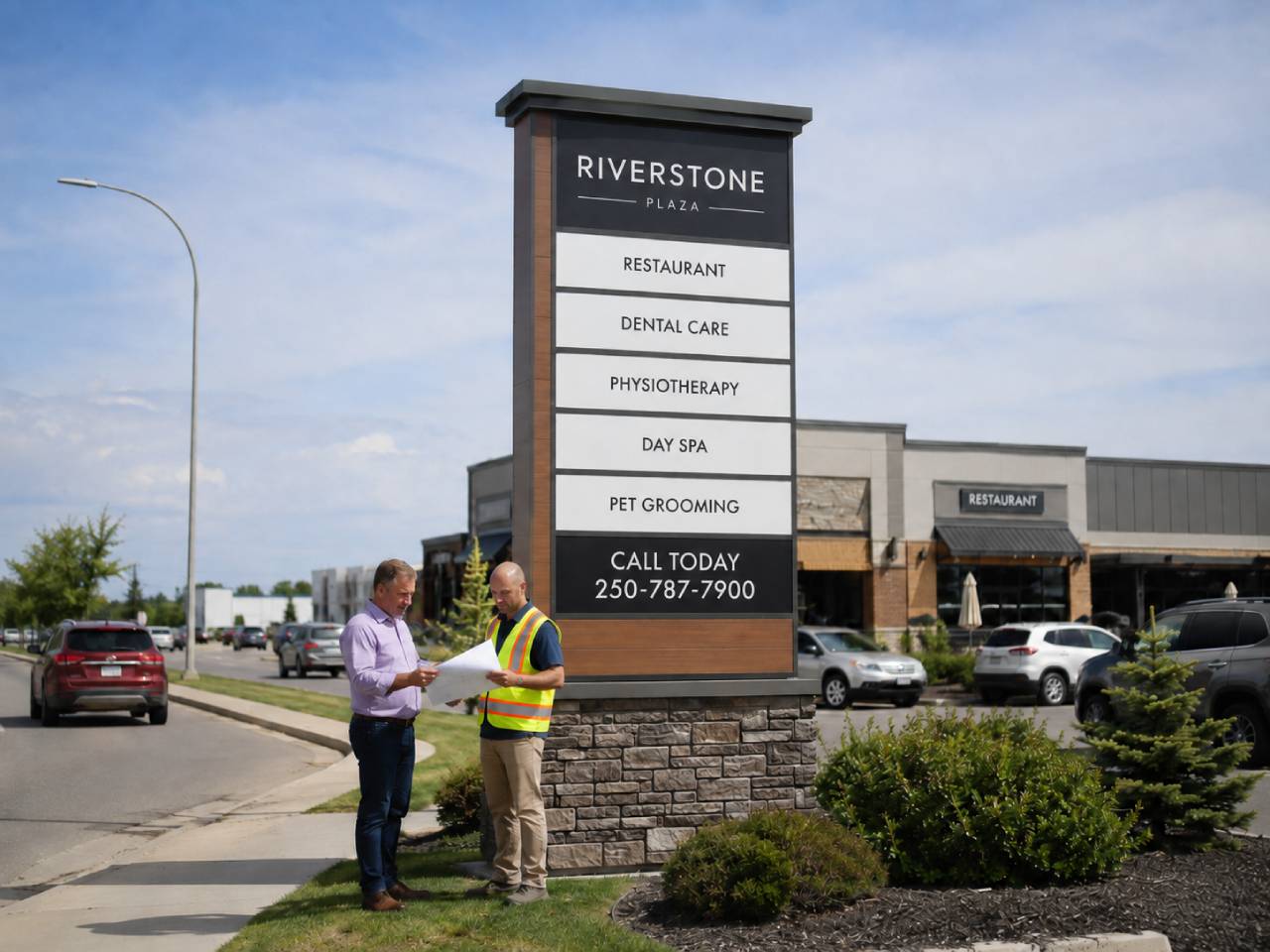
How to Plan a Pylon Sign: Visibility, Tenants & Permits
A pylon sign is often the first thing a driver notices before turning into a business. Tall, freestanding, and built for distance, these signs do the heavy lifting when it comes to roadside visibility. At Signworks Inc, we’ve helped property owners and franchise operators across Fort St. John plan pylon signs that hold up to traffic, weather, and years of daily use.
Planning one properly takes more than picking a size and ordering a sign face. Location, tenants, lighting, and permits all shape the final result. This guide walks through what actually goes into pylon sign planning, so you can avoid costly mistakes before construction begins.
Quick Answer: A pylon sign should be planned around visibility, traffic direction, viewing distance, tenant needs, lighting, foundation requirements, permits, and long-term maintenance. The best results come from choosing the right location, keeping the sign face easy to read, checking local bylaws early, and working with an experienced sign company before fabrication begins.
What Is a Pylon Sign and Why It Matters for Roadside Visibility
A pylon sign is a tall freestanding sign supported by one or more poles, usually placed near a road or entrance rather than attached to a building. Unlike wall-mounted signage, a pylon sign stands above sightlines, making it one of the most effective tools for business visibility along busy roads.
For commercial property signage, this height advantage matters. Drivers moving at speed need a sign they can read from a distance, not one hidden behind parked cars or nearby buildings. A well-placed pylon sign gives businesses a few extra seconds of visibility, which often makes the difference between a customer turning in or driving past.
Key Factors in Pylon Sign Planning
Good pylon sign planning starts long before fabrication. A few factors shape every decision that follows.
Location and Traffic Flow
Placement should account for traffic flow in both directions. A sign visible only to cars heading one way misses half the potential audience. Sightline studies help determine where a sign reads clearly without being blocked by trees, utility poles, or other structures.
Sign Face Design
The sign face is where brand recognition happens. Clear fonts, strong contrast, and consistent colors help drivers process information in the few seconds they have while passing by. Overcrowded sign faces with too much text or too many logos often become harder to read at speed, not easier.
Foundation and Footing Requirements
Every pylon sign needs a solid foundation footing to withstand wind load and ground conditions. Foundation depth depends on sign height, local soil type, and regional weather, so this step should never be estimated without proper engineering review.
Single Pole vs Multi Tenant Pylon Signs
Not every pylon sign serves just one business.
Single Pole Pylon Sign
A single pole pylon sign works well for standalone businesses like gas stations, restaurants, or single-tenant retail locations. These typically feature one large sign face with a simpler structural design.
Multi-Tenant Pylon Signs
Multi-tenant pylon signs serve shopping centers, plazas, and office complexes with several businesses sharing one structure. Each tenant gets a dedicated panel, and layout order often reflects lease agreements or visibility priority. Planning ahead for future tenant changes, such as removable panel systems, saves money compared to rebuilding the entire sign later.
Custom Pylon Signs and Design Options
Custom pylon signs allow businesses to move beyond generic templates and build a structure that matches their brand and property.
Double Sided Pylon Sign
A double-sided pylon sign displays messaging to traffic from both directions, maximizing visibility on two-way roads without needing two separate structures.
Modern Pylon Sign Design
A modern pylon sign design often uses clean lines, slimmer poles, and integrated LED elements rather than bulky traditional cabinets. This style works well for businesses wanting a more contemporary storefront presence.
Mini Pylon Sign Options
For smaller properties or tighter frontages, a mini pylon sign offers similar visibility benefits at a reduced scale and cost, without requiring the footprint of a full-sized structure.
Gas Station Pylon Signs
Gas station pylon signs often combine branding with digital price displays, requiring specific structural and electrical planning beyond a standard retail sign.
LED Pylon Signs and Illumination Options
LED pylon signs keep a business visible after dark, which matters most during winter months when daylight hours are short. An illuminated pylon sign typically uses one of two approaches: internally lit cabinets or externally mounted LED fixtures aimed at the sign face.
Choosing the right illumination depends on local sign bylaws, energy costs, and how the sign integrates with surrounding lighting. Our full range of illuminated signage solutions covers LED options built for Northern BC weather conditions.
Custom Business Signs: Building Visibility Around Your Brand
While pylon signs handle roadside visibility, they work best as part of a complete signage strategy. Custom business signs ensure every part of a property, from the road to the front door, communicates the same brand consistently.
Custom signage helps businesses in several ways:
- Improves visibility with sizing and placement matched to traffic patterns
- Attracts customers through design that stands out from nearby competitors
- Strengthens brand recognition with consistent colors, fonts, and materials across every sign
- Guides visitors through wayfinding elements from the road to the entrance
- Supports promotions with changeable panels or digital displays
- Creates a professional first impression before a customer even parks
At Signworks Inc, custom sign projects start with understanding a property’s traffic patterns, tenant mix, and long-term branding goals before any design work begins. Our commercial signage solutions include pylon signs alongside monument signs, wall signs, and channel letters for a consistent look across an entire property.
Common Pylon Sign Planning Mistakes to Avoid
Common mistakes include placing the sign where sightlines are blocked, adding too much text to the sign face, forgetting future tenant changes, underestimating foundation requirements, ignoring electrical needs for lighting, and waiting too long to check local sign bylaws. Addressing these issues early helps avoid redesigns, delays, and added costs.
Pylon Sign vs Monument Sign: Which One Fits Your Property?
A pylon sign is best when a business needs long-distance visibility from a road or highway. A monument sign is usually lower to the ground and works better near entrances, campuses, offices, and properties where close-up visibility matters more than distance. For roadside businesses, plazas, gas stations, and multi-tenant sites, pylon signs are often the stronger visibility choice.
Sign Permits and Local Regulations
Sign permits are one of the most overlooked steps in pylon sign planning. Most municipalities regulate maximum height, setback from the road, and total sign area, and these rules vary significantly between locations.
A few permit considerations worth planning for early:
- Height restrictions, which often limit how tall a pylon sign can be near residential zones
- Setback requirements from property lines and road edges
- Electrical permits for any illuminated pylon sign
- Sign area limits, especially for multi-tenant structures with several panels.
Working with a pylon sign company familiar with local bylaws helps avoid delays or costly redesigns after construction has already started.
Pylon Sign Construction and Installation Timeline
Pylon sign construction typically follows a set sequence: engineering review, permit approval, foundation work, pole and structure installation, and finally sign face mounting. Weather can affect timelines, particularly foundation work during frozen ground conditions common in Northern BC winters.
Planning installation during warmer months, when possible, often keeps a project on schedule and avoids unexpected delays.
How Much Does a Pylon Sign Cost?
How much a pylon sign costs depends on several factors:
| Factor | Impact on Cost |
| Sign height | Taller structures need deeper foundations, stronger support, and more materials |
| Single vs multi-tenant design | Multi-tenant panels add design, fabrication, and update flexibility requirements |
| Illumination | LED lighting and internally lit cabinets add electrical and material costs |
| Sign face size | Larger faces require more material and stronger structural support |
| Permits and engineering | Fees vary by municipality, site conditions, and project complexity |
| Installation conditions | Frozen ground, access limits, and utility locations can affect timeline and cost |
Budgeting for proper engineering and quality materials upfront generally costs less than repairing a poorly built structure after a few years of weather exposure.
Working With an Experienced Pylon Sign Company
Planning a pylon sign involves engineering, design, permits, and installation working together smoothly. Signworks Inc has helped retail centers, franchise operators, gas stations, and property managers across Fort St. John plan pylon signs that perform for years, not just look good on day one. Because pylon signs involve structure, visibility, electrical planning, and local permit requirements, working with an experienced sign company helps reduce design changes, installation delays, and long-term maintenance issues.
If you’d like to see feedback from businesses we’ve worked with, check our reviews on Google before reaching out to discuss your property’s signage needs.
Final Thoughts
A pylon sign remains one of the strongest tools for roadside visibility, but only when it’s planned properly. Location, tenant needs, lighting, and permits all shape whether a sign performs well for years or becomes a costly redo. Careful planning upfront saves both time and money down the road.
Frequently Asked Questions
What is the difference between a pylon sign and a monument sign?
A pylon sign is a tall, pole-mounted freestanding sign designed for distance visibility, while a monument sign sits low to the ground and works better for closer, walk-up visibility.
How tall can a pylon sign be?
Height limits vary by municipality and zoning, with many areas restricting pylon signs near residential zones. Checking local sign bylaws before design is essential.
Do pylon signs need a building permit?
Yes. Most municipalities require permits covering height, setback, and electrical work for illuminated pylon signs.
How much does a pylon sign typically cost?
Cost depends on height, illumination, single versus multi-tenant design, and local permit or engineering fees, with taller and illuminated signs generally costing more.
Can a pylon sign be updated for new tenants?
Yes. Multi-tenant pylon signs are often designed with removable panels, allowing tenant changes without rebuilding the entire structure.
